
The history of packaging shows one simple thing: people have always looked for ways to protect, transport and preserve their goods. In this article you will see, in brief, how packaging materials have evolved. You will also see what this evolution means for companies shipping products today.
What packaging did people use in antiquity?
The first packaging was made from whatever nature provided. People used what they had to hand to carry food and goods from one place to another.
Some of the oldest forms of packaging include:
- baskets woven from reed, wicker or plant fibres;
- animal-skin bags for water, wine or milk;
- ceramic pots and amphorae for oil, grain and wine;
- woven sacks for dry goods;
- wooden crates and barrels for long-distance transport.
They all had the same role as packaging today. They protected the contents, made them easy to move and helped with storage.
How have packaging materials evolved?
As crafts developed, processed materials appeared. Glass and metal began to be used for stronger, better-sealed containers.
Paper was an important step. It was invented in China and gradually spread to the Middle East and Europe. Merchants began to use it to wrap the goods they sold.
In the modern era, metal packaging gained ground. Tin cans made it possible to keep food for long periods. Canned food changed the way food was transported and stored.
When did cardboard packaging appear?
Cardboard became important in the 19th century, with industrialisation. Paper-making machines made the material cheaper and available in large quantities.
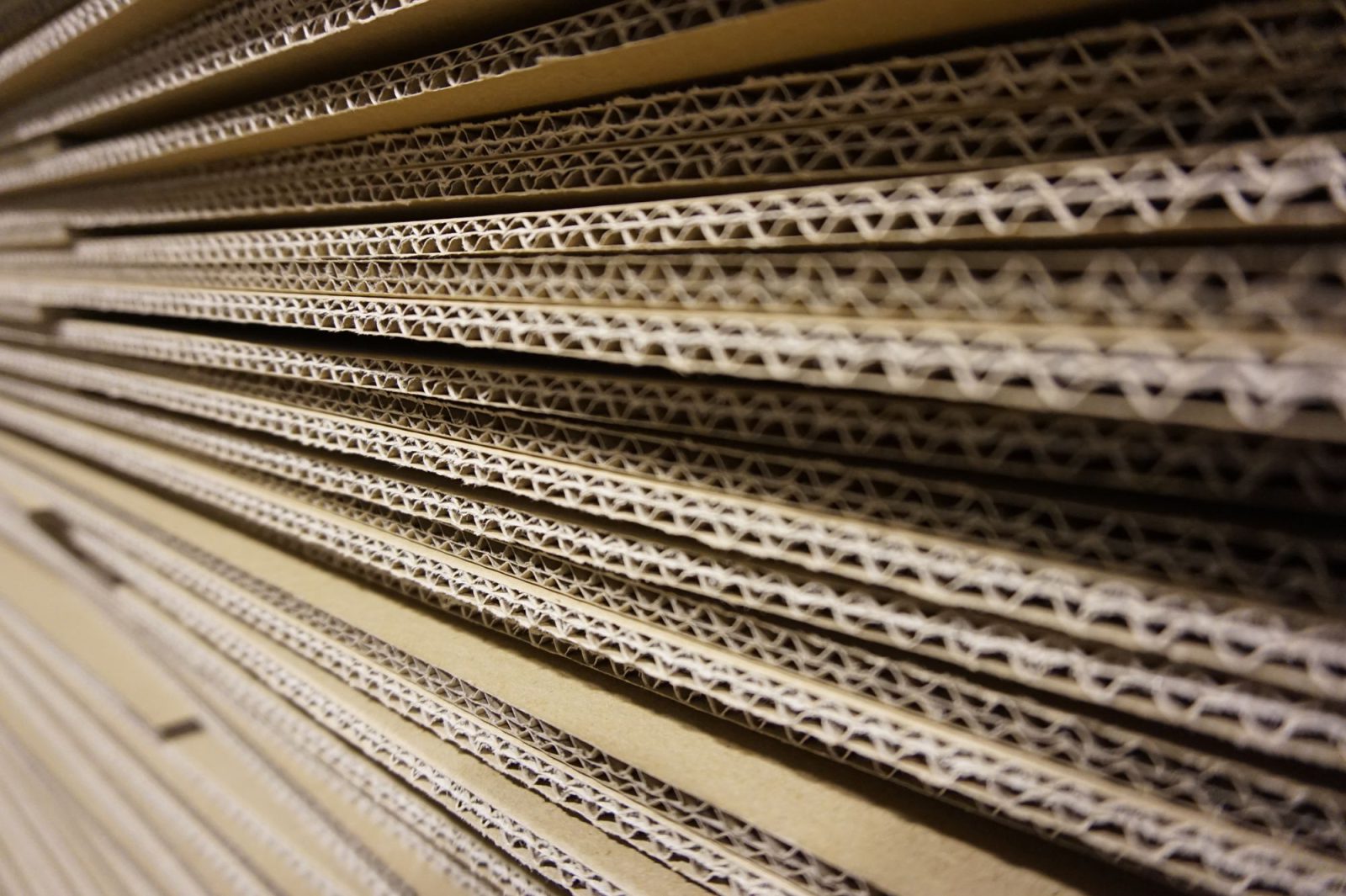
Corrugated board appeared in the same period. At first it was used as a filling and protective material. Later it became the main material for shipping boxes.
Its advantages are the same today:
- it is light for the strength it provides;
- it absorbs shocks thanks to the fluted layer;
- it is easy to cut, fold and print;
- it folds flat and takes up little space until use;
- it is recyclable.
What changed in the 20th century?
In the 20th century, packaging became a profession. Specialists appeared, along with university programmes dedicated to packaging engineering.
Materials diversified according to the product. Plastic, film and cardboard began to be chosen for specific requirements: weight, moisture, fragility, transport time.
At the same time, packaging took on a new role. Beyond protection, it became a communication tool. The logo, colours and printed information began to sell the product.
Why does recycling matter in the history of packaging?
Growing consumption also brought more waste. In recent decades, recycling and renewable materials have become a priority.
Corrugated board has a clear advantage here. It is made from cellulose fibres and is routinely recycled. FSC certification shows that the fibres come from responsibly managed sources.
For a company, the choice of packaging now also affects its image. Customers and trading partners increasingly ask for sustainable solutions.
What does this evolution mean for your business?
Packaging has not stopped evolving. Today's requirements are more precise than ever: exact dimensions, tailored protection, controlled cost and reduced environmental impact.
WEPADI has been producing corrugated board, pressed cardboard and duplex board packaging since 2011. Our own production in Timișoara allows us to adapt the box to your product. We follow ISO 9001:2015 and ISO 14001. On request, the raw material can be FSC®-certified.
A few things you can ask for directly:
- regular slotted containers (RSC, FEFCO 0201) with no tooling cost, up to 2000 × 1000 × 1000 mm;
- a minimum order quantity that depends on the box size and board type, confirmed with the quote;
- graphic design and packaging design;
- just-in-time assembly and delivery, in Romania and the EU.
From history to the right packaging for your product
The history of packaging shows that the best solutions are the ones adapted to the product and the transport. Corrugated board remains one of the most practical choices for businesses. Tell us what you ship and we will send you a quote within 24 hours. Send us a quote request.